Practical Ways to Improve Surface Finish in Milling
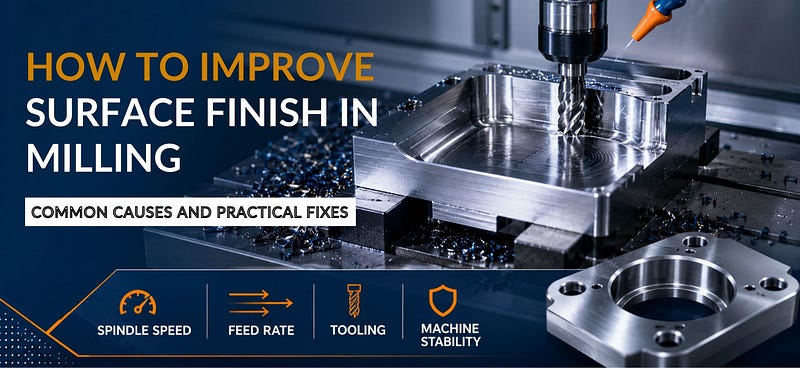
A smooth surface finish is often a sign of a stable machining process. When rough surfaces, visible tool marks, or inconsistent finishes appear, they usually indicate that one or more machining conditions need adjustment. Factors such as cutting parameters, tooling, machine rigidity, and workholding all influence the final quality of a machined part.
Understanding how these factors work together helps machinists produce more consistent results while reducing unnecessary rework.
Why Surface Finish Matters
Surface finish affects more than the appearance of a machined component. It can influence dimensional accuracy, wear resistance, friction between mating parts, and overall part performance. A smoother finish also reduces the amount of secondary polishing or finishing required after machining.
Improving surface quality often begins with evaluating the entire machining setup rather than changing a single cutting parameter.
Adjust Feed Rate and Spindle Speed Carefully
Feed rate and spindle speed work together to determine how efficiently material is removed.
If the feed rate is too high, visible tool marks and rough surfaces may appear. If it is too low, the cutter may rub instead of cutting cleanly, creating excess heat and reducing finish quality. Spindle speed also affects cutting performance. Running too fast or too slowly can increase vibration, heat, or tool wear.
Making gradual adjustments while observing the cutting process often produces better results than making large changes all at once.
Use Sharp Cutting Tools
Tool condition has a direct impact on surface finish. A worn cutting edge requires more cutting force, increasing vibration, and leaving rougher surfaces behind.
Selecting cutting tools that match both the material and machining operation helps improve cutting efficiency and maintain a more consistent finish throughout the job.
Improve Machine Rigidity
Machine rigidity plays a major role in reducing vibration during milling operations. Loose machine components, unstable fixtures, or excessive tool overhang can all contribute to poor surface quality.
Keeping the cutting tool as short as practical and ensuring the workpiece is securely clamped creates a more stable machining environment. Stable machine setups usually produce smoother finishes and more consistent cutting performance.
Reduce Chatter During Machining
Chatter is one of the most common causes of poor surface finish. It leaves visible ripple marks on the workpiece and increases tool wear.
Reducing vibration often requires checking multiple factors, including spindle speed, feed rate, workholding, and machine rigidity. Understanding the causes of milling machine chatter helps identify setup issues before they affect machining quality.
Match Cutting Parameters to the Material
Every material behaves differently during machining.
Aluminum generally supports higher cutting speeds, while steel requires more controlled cutting conditions. Plastics may require additional attention to heat generation because excessive temperature can affect the finished surface.
Adjusting machining parameters according to different CNC milling materials helps maintain better cutting stability and improve finish quality.
Check Tool Deflection and Workholding
Long cutting tools are more likely to flex during machining. This movement creates uneven cutting forces that can leave visible tool marks on the finished surface.
Proper workholding is equally important. A securely clamped workpiece reduces movement during cutting and helps maintain dimensional accuracy. Small improvements in setup often have a noticeable effect on overall surface finish.
Build Better Results Through Consistent Practice
Surface finish improves as machinists gain experience, making small adjustments to cutting conditions. Observing chip formation, machine sound, and cutting stability provides valuable feedback for future setups.
Testing different machining strategies on a variety of projects helps develop a better understanding of how tooling, materials, and machine behavior work together.
Final Thoughts
Achieving a better surface finish is usually the result of several small improvements rather than a single adjustment. Feed rate, spindle speed, tool condition, machine rigidity, and stable workholding all contribute to cleaner and more consistent machining results.
Taking a systematic approach to evaluating each part of the machining process helps improve accuracy, extend tool life, and produce higher-quality finished components.
Originally Published Blog: How to Improve Surface Finish in Milling


Comments
Post a Comment